$78.89
From the bench
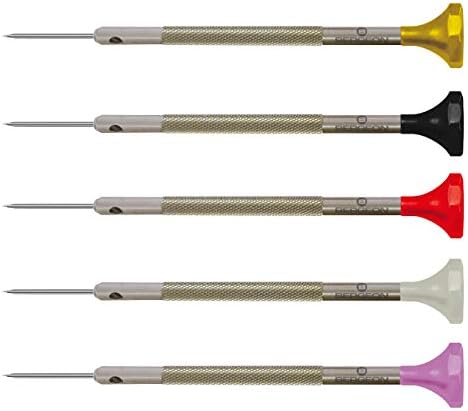
We dress our screwdriver blades at Le Locle to match the slot in front of you. A watchmaker never chooses a driver by whatever name sits on a bridge or a parts list. The slot sets the tool. When the blade fills the slot across its full width, torque transfers across the steel instead of tearing it.
A screw slot has two walls, a bottom flat, and two open ends. We size our drivers so the blade spans the full width of the slot without hanging over the edge of the head. If the blade is too wide, the corners dig into the surrounding plate as you turn. If it is too narrow, you drive from the center out.
The thickness of the blade matters as much as the width. A blade that rattles in the slot will ride up the walls under torque. It will twist out of the cut, chew the slot corners, and slide across the balance cock or bridge. You inspect the slot under magnification before your fingers touch the barrel of the tool.
When you place a blade that is a step too narrow into a stubborn screw, force concentrates at the center of the head. The steel of the screw yields. The slot mushrooms outward at the ends, throwing burrs above the polished surface of the screw head. Those burrs catch winding wheels or rub against plates.
Once a slot is deformed, the driver will no longer seat flat. If the screw stays stuck, the blade tears the slot completely or shears off inside the plate. You then face drilling out the shank or dissolving the steel in acid. Sizing the blade down to save time at the bench always costs more time later.
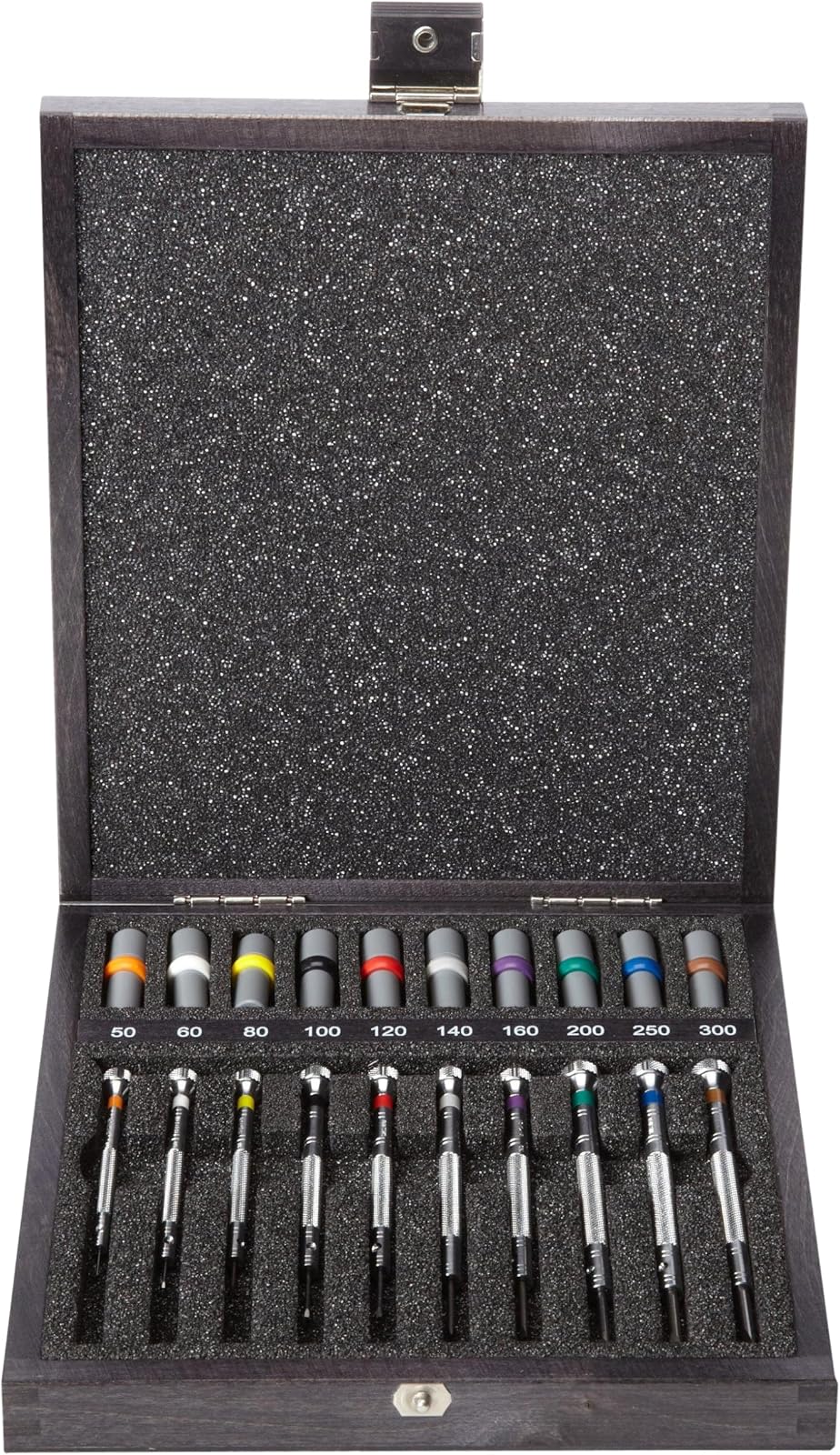
We grind our blades in progressive steps across the entire set. Each step shifts the width and the tip thickness together, keeping the taper steady. You move up or down the stand until you find the blade that fills the cut with zero rock. A proper fit feels dead in the hand before you turn.
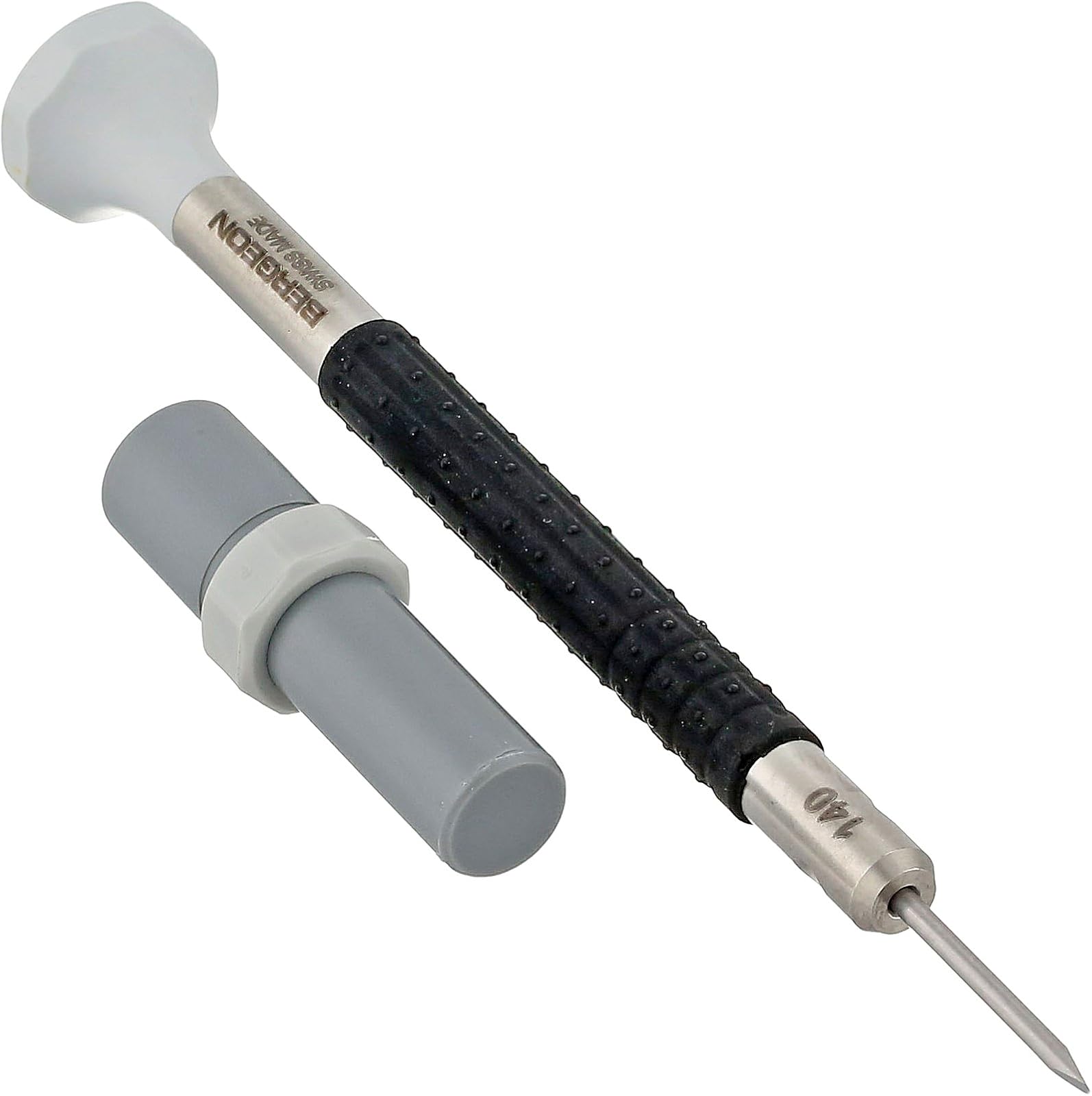
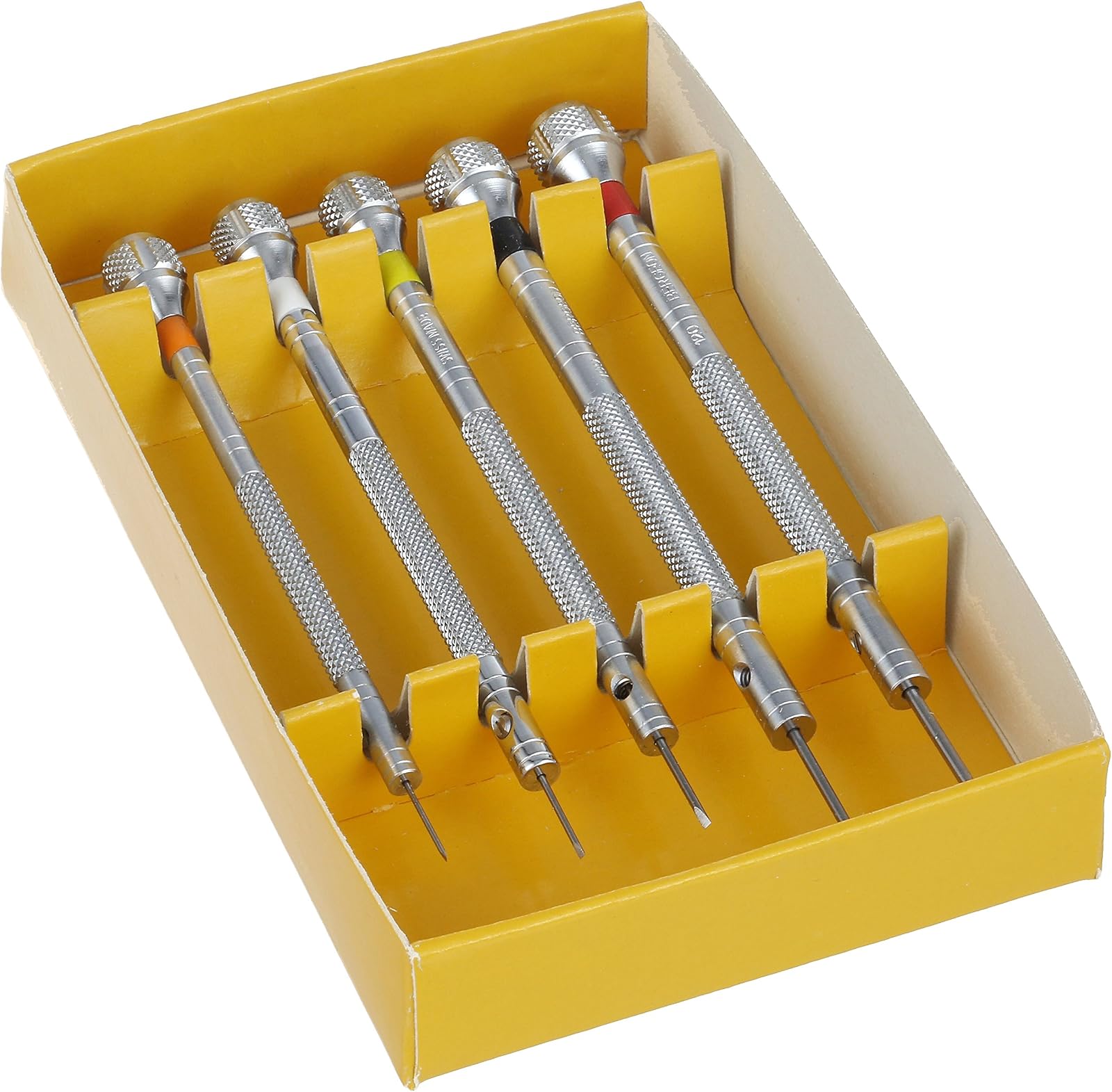
Our color rings on the knurled barrels let you return to the same size across repeated operations. You learn which color matches the bridge screws of a caliber and which fits the balance assembly. Even so, variations in plating and factory finishing mean you always verify the fit on the individual screw before applying torque.
Steel blades wear with daily bench work. The flat face rounds off, the parallel sides wedge out, and the sharp corners chip under heavy load. A rounded blade is an invitation to slip. We dress our blades on an India stone using a blade sharpener guide to maintain a flat tip with parallel ground flanks.
When repeated dressing shortens a blade past its working taper, or when a tip snaps, you swap the blade out. Loosen the set screw on the side of the barrel, draw the old blade forward, and seat a fresh blade fully into the bore. Tighten the set screw firmly against the flat on the shank.
Prices are as our retail partner last showed them.
$78.89
$299.00
4.5 from 108 notes
$21.95
$89.00
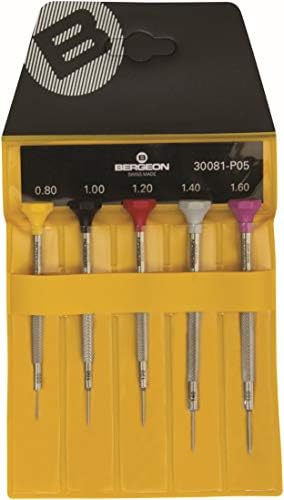
4.7 from 38 notes
$86.99
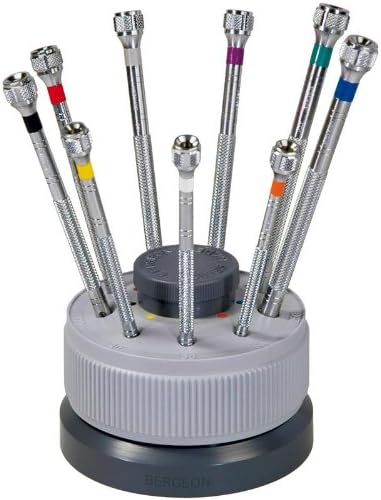
4.6 from 9 notes
$270.00
A driver is only as good as the steel at its tip. Keep your stones clean, check the blade profile often under a loupe, and change the tip the moment the edges lose their square ground corners. The work on the movement shows it immediately.
The order of work when a strap or bracelet comes off: which end of the spring bar tool does what, the difference between a fork end and a pin end, drilled lugs against closed lugs, and why the bracelet is held rather than gripped.
Snap backs against screw backs against monobloc cases, how a case key and its dies engage a fluted rim, why the case is held in a holder rather than in the hand, and what to do when the back has been opened badly before.
Why oilers come in graded sizes, what an oil cup with a lid is for, why the oil is picked up from the cup and not from the bottle, how a jewel takes a drop, and how oilers are cleaned between grades.